
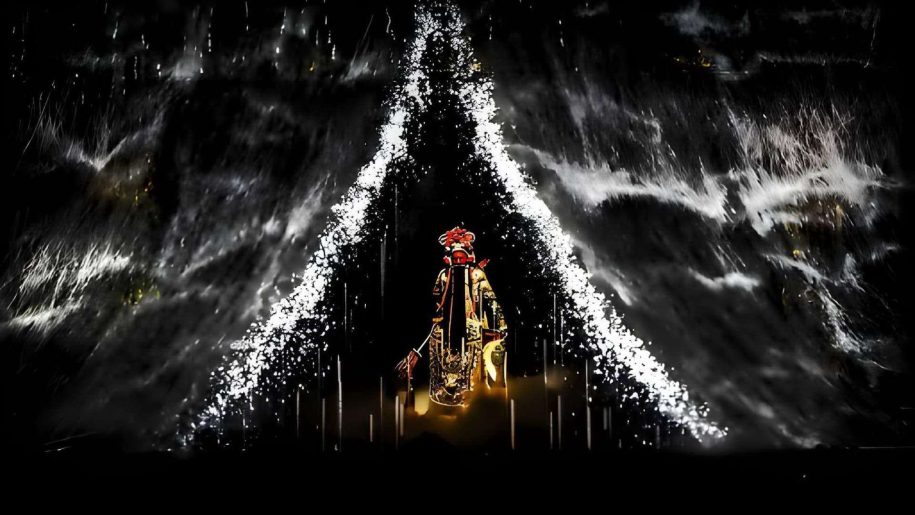
Peking Opera, or Jīngjù (京剧), is one of China’s treasured traditional performing arts. Combining singing, acting, martial arts, acrobatics, elaborate costumes, and intricate makeup, it represents centuries of cultural refinement. Its evolution from regional operas to a nationally celebrated art form reflects the social, political, and artistic history of China. Today, venues like Liyuan Theatre in Beijing preserve this living tradition, allowing audiences to witness its timeless allure firsthand.
Historical Origins of Peking Opera
The roots of Peking Opera can be traced back to the late 18th century Qing Dynasty, around 1790. Before its formal emergence, China was home to numerous regional opera forms, each with distinctive musical scales, performance techniques, and stage conventions. Among these, Kunqu Opera, Hui Opera, and Han Opera played a particularly influential role.
- Kunqu Opera: Known for its delicate melodies and elegant movements, Kunqu had a profound influence on vocal technique and storytelling in Peking Opera.
- Hui Opera: Originating from Anhui province, it contributed rhythmic complexity and expressive gestures.
- Han Opera: From northern China, it introduced robust acting and martial performance elements.
The fusion of these traditions occurred when troupes traveled to Beijing, performing for imperial audiences, the literati, and the general public. Over time, these combined elements crystallized into a standardized form of performance, which would eventually be recognized as Peking Opera.
Initially, performances took place in both the imperial court and public spaces such as teahouses. The accessibility of the art form to all social classes helped cement its popularity, allowing it to become a shared cultural experience and a reflection of society’s values.
Formation of Major Schools and Styles (流派, Pai)
The development of Peking Opera is inseparable from the formation of its major schools or “pai”, which codified unique styles of singing, acting, and movement. These schools shaped not only performances but also educational practices for generations of performers.
Mei School (梅派)
Founded by Mei Lanfang (1894–1961), the Mei School is perhaps the most internationally renowned. Mei Lanfang specialized in Dan roles (female characters), portraying them with grace, subtlety, and emotional depth. His style emphasized soft, lyrical singing, delicate hand gestures, and gentle movements that evoked elegance and refinement.
Mei Lanfang’s international tours in the 1930s and 1940s introduced Peking Opera to audiences in Japan, the United States, Europe, and Russia, greatly enhancing its global reputation. His performances demonstrated the artistic sophistication of Chinese opera and inspired numerous foreign artists and scholars.
Cheng School (程派)
Cheng Yanqiu (1897–1958) founded the Cheng School, which focused on tragic roles and emotional intensity. Cheng’s method emphasized vocal expression to convey psychological depth, often portraying suffering, loyalty, and moral dilemmas. His style remains influential for actors specializing in dramatic roles.
Shang School (尚派)
Shang Xiaoyun (1900–1976) established the Shang School, which uniquely integrates lyrical singing with vigorous movement. Performers trained in this school demonstrate agility, acrobatic skill, and strong stage presence, ensuring performances are visually striking as well as musically impressive.
Other Notable Schools
- Huang School (黄派): Focused on heroic male roles (Sheng), blending powerful vocals with strong martial technique.
- Tan School (谭派): Known for its light, melodious singing style, especially for young female roles.
- Qi School (齐派): Distinguished for its innovative integration of dialogue and stage choreography.
Each school’s techniques, singing style, and stagecraft contributed to the richness of Peking Opera, allowing performers to develop distinct artistic identities while maintaining tradition.
Role Types and Classification
Peking Opera categorizes characters into four primary types, each with subtypes that provide nuance:
Sheng (生) – Male roles:
- Laosheng: Elderly male characters, often scholars or officials.
- Xiaosheng: Young male characters, frequently lovers or heroes.
- Wusheng: Martial male roles, emphasizing acrobatics and combat.
Dan (旦) – Female roles:
- Qingyi: Gentle, virtuous women.
- Huadan: Young, lively, and sometimes mischievous women.
- Laodan: Elderly women, often with wisdom or authority.
Jing (净) – Painted-face roles: Warriors, generals, or villains. Makeup colors symbolize traits:
- Red: Loyalty and courage
- Black: Integrity and strength
- White: Cunning or treachery
Chou (丑) – Comic roles, often witty or cunning, providing contrast and relief in dramatic narratives.
This classification allows audiences to immediately understand a character’s personality and role within the story, even before dialogue or action occurs.
Performance Techniques and Training
Peking Opera performers undergo years of intense training, often beginning in early childhood. Training emphasizes mastery in four fundamental skills known as “唱念做打” (Chang, Nian, Zuo, Da):
- Chang (唱) – Singing with precise pitch, tone, and expression.
- Nian (念) – Speech and recitation, delivering lines with rhythm and emotional nuance.
- Zuo (做) – Acting and movement, conveying character through stylized gestures.
- Da (打) – Martial arts and acrobatics, including flips, tumbling, and stage combat.
Additional training includes facial expression control, stage presence, and instrument coordination. Traditional Peking Opera music employs instruments such as the Jinghu, Yueqin, gongs, and drums, which synchronize with movement to enhance dramatic effect.
Costumes, Facial Makeup, and Stage Design
- Costumes: Peking Opera costumes are made from silk and richly embroidered, representing a character’s social status, personality, and occupation. Long flowing sleeves, elaborate headdresses, and distinctive shoes all contribute to the visual storytelling.
- Facial Makeup (脸谱): Each color and pattern has symbolic meaning. For example, red signifies bravery, white represents cunning, and black denotes integrity.
- Props and Stagecraft: Even minimal props—like a fan, spear, or table—carry symbolic meaning, enabling performers to convey complex scenes with simplicity.
This combination of visual elements with vocal and physical performance creates a uniquely immersive experience.
Cultural Significance and Social Role
Peking Opera has served multiple societal functions:
- Historical and Moral Education: Performances often depict historical events, folklore, and moral lessons.
- Festival and Celebration: Traditionally performed during festivals, weddings, and official celebrations.
- Cultural Identity: Peking Opera embodies Chinese cultural values, including loyalty, filial piety, and righteousness.
- Entertainment for All Classes: From imperial courts to local teahouses, the art form has historically bridged social divisions.
Its influence extends beyond China; international tours have introduced global audiences to its artistry, promoting cross-cultural understanding.
Modern Innovation and International Reach
Today, Peking Opera incorporates modern lighting, sound, and stage design, attracting younger audiences while preserving traditional techniques. International collaborations and performances in countries like Japan, France, the United States, and Russia have showcased its global appeal.
Venues such as Liyuan Theatre provide both authentic and contemporary experiences, combining:
- Traditional repertoire with new stories
- Classic costumes with modern stage effects
- Martial arts choreography with theatrical innovation
These adaptations ensure that Peking Opera remains relevant and accessible to contemporary audiences while honoring its historic roots.
Future of Peking Opera and Cultural Preservation
Preserving Peking Opera requires dedication to:
- Education: Training programs for young performers to maintain traditional skills.
- Innovation: Blending contemporary storytelling techniques with classical forms.
- International Promotion: Cultural exchange and tours to raise global awareness.
- Digital Archiving: Recording performances for posterity and educational purposes.
The next generation of performers at venues like Liyuan Theatre continues this legacy, keeping Peking Opera alive as both a traditional art form and a dynamic cultural experience.
Conclusion
Peking Opera is more than a performance; it is a living repository of Chinese history, artistry, and culture. From its regional origins to the rise of influential schools, iconic performers, and global recognition, it remains a vital part of China’s cultural identity. Experiencing a live show at Liyuan Theatre in Beijing allows audiences to witness the perfect synthesis of singing, acting, martial arts, and visual artistry—a truly unforgettable cultural journey.


Leave a Reply