
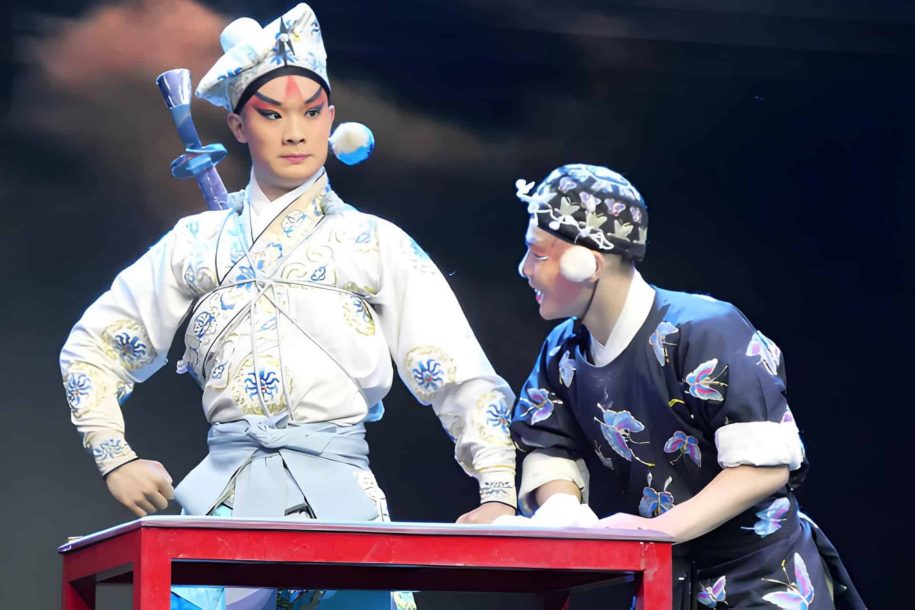
Peking Opera (京剧, Jingju) is one of China’s most iconic art forms, combining music, singing, acting, martial arts, acrobatics, and intricate stage design. Each element has deep cultural significance and centuries of tradition. From colorful makeup to dramatic storytelling and stage effects, understanding these aspects makes attending a show at Liyuan Theatre or other Beijing theatres a richer experience.
The Art of Makeup: Lianpu
One of the most striking features of Peking Opera is its exaggerated facial makeup, called Lianpu. Each color, pattern, and line conveys a character’s personality, status, and morality:
- Red indicates loyalty and bravery
- White represents treachery or cunning
- Black symbolizes integrity and strength
- Blue and green show stubbornness, heroism, or rebelliousness
The design of the makeup also conveys the role type: Sheng (male), Dan (female), Jing (painted-face), and Chou (clown). Watching pre-show makeup is a captivating experience, revealing both artistry and centuries-old symbolic storytelling.
Storylines and Characters
Peking Opera stories are drawn from Chinese history, folklore, and classical literature, often emphasizing moral values, loyalty, filial piety, and heroism. Common themes include historical battles, romantic tales, and mythical stories. Each character type has distinct movement, voice, and costume conventions, helping visitors follow complex stories and enjoy the performance.
Stage Effects and Performance Techniques
The stage is minimalist yet symbolic, relying on gestures, props, and acrobatics to convey action and emotion. Key aspects include:
- Martial arts and acrobatics: flips, jumps, and fight choreography
- Props: simple items like fans or handkerchiefs represent swords, mountains, etc.
- Music and percussion: highlights dramatic moments and emotional tension
Even without understanding Chinese, viewers can appreciate the visual storytelling and rhythm of the performance.
Evolution of Peking Opera
Peking Opera originated in the late 18th century and became prominent during the Qing Dynasty. It combines regional operas like Kunqu, Hubei, and Hunan Opera, evolving into a standardized form with four main roles: Sheng, Dan, Jing, and Chou. Over time, it integrated modern stage techniques, introduced new stories, and developed international performances, making it a recognized Chinese cultural export.
Tips for Foreign Visitors
- Observe facial expressions and gestures; colors and movements convey meaning.
- Focus on rhythm and percussion; music guides the story even without language comprehension.
- Arrive early to witness makeup and costume preparations.
- Read summaries or programs; many theatres, like Liyuan Theatre, provide English guides.
- Engage with staff or guides to learn about characters, story background, or stage symbolism.
By paying attention to these elements, visitors gain a deeper appreciation for the artistry and cultural significance of Peking Opera. For booking or tours, see Liyuan Theatre Beijing Tours.
Conclusion
Peking Opera is a multi-layered art form blending singing, acting, martial arts, acrobatics, and visual storytelling. Understanding makeup, characters, props, and stage techniques enhances the enjoyment of this centuries-old Chinese tradition for visitors at Liyuan Theatre.

Leave a Reply